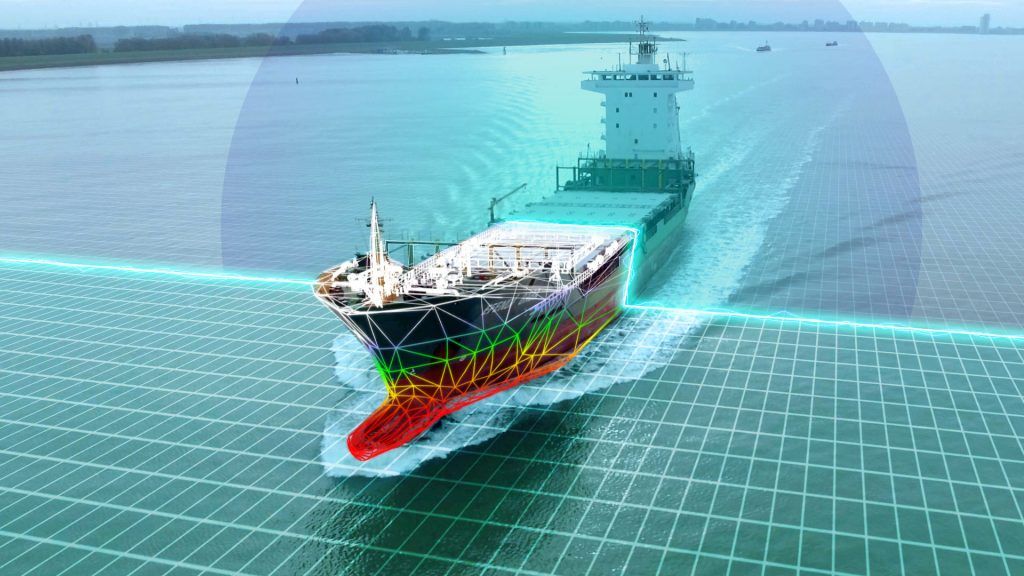
Union Plus Ship Design (UPSD) published a technical note on its website reviewing where computational fluid dynamics sits in ship performance assessment, how results are verified and where its limits remain.
The scope of computational fluid dynamics in ship design has widened considerably. Work that once centred on resistance prediction now covers wake field analysis, hull and propeller interaction, self-propulsion points, cavitation observation and the comparison of energy saving devices, all before the hull lines are frozen. A numerical towing tank and physical model tests have become complementary rather than competing sources of evidence.
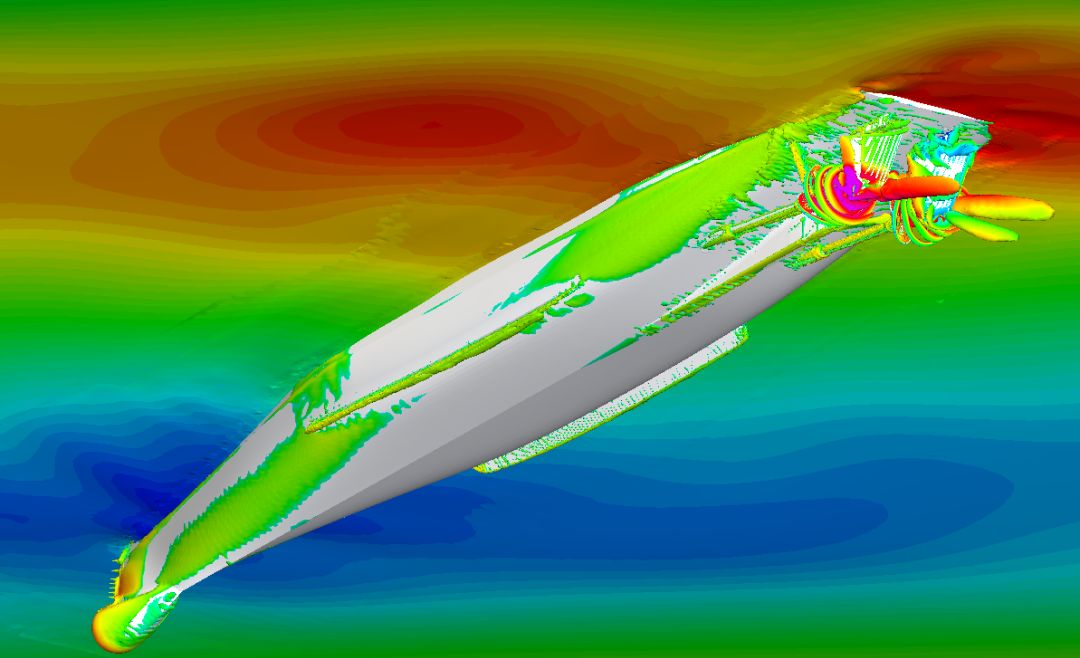
Credibility still rests on the fundamentals. The choice of turbulence model, the meshing strategy and near-wall treatment change the fine structure of the wake field. Free surface handling, scale effects and the way appendage geometry is simplified all affect the distance between a computed result and behaviour at full scale. A single run is not a verdict. Stating that plainly at concept stage matters, because a selection discussion built on unchecked assumptions is difficult to unwind later.
Recent progress clusters around several directions. Adaptive meshing places computing effort where the flow changes sharply. Higher-fidelity turbulence simulation is used to observe unsteady interaction, and adjoint-based optimisation turns hull line adjustment from manual trial into directed search. In parallel, workflow automation fixes the repetitive set-up and archiving steps, while test data is used for error correction and calibration so that computation and measurement gradually converge.
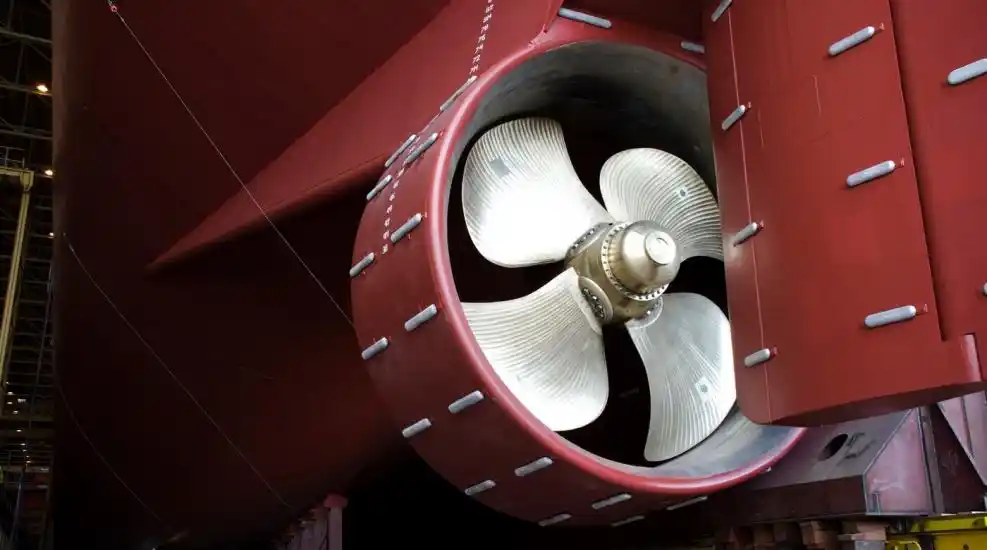
The method path deserves more attention than any individual technique. A team declares the operating condition and assumptions, checks mesh independence, benchmarks against model tests and then delivers the conclusion together with its range of applicability. Class submission continues to follow established procedures. Reproducing the same result from the same input remains the condition for any conclusion to be reviewable.
In daily work the change is concrete. Before the lines are frozen, a designer checks the uniformity of the wake at the propeller plane and moves a propulsion rework decision forward. Assumptions, inputs and deviations from each run are archived for the next vessel. The note gives no prediction accuracy, mesh size, compute metric or energy saving figure; such claims will be added under the same reporting standard once sourced data is available.
About Union Plus Ship Design (UPSD)
Union Plus Ship Design is an independent ship design company based in Wuhan, China, specializing in the engineering and design of small-to-medium civil vessels. Our core services cover four vessel types: small-to-medium container ships, ro-ro passenger ferries, deck barges, and harbor/inland river tugboats — spanning concept design through to construction production drawings.